
why do men hate women?
something i keep wondering about

Let me preface this by saying: not all men. We know. We’ve always known. Consider it stated, acknowledged, and filed away so we can move on to the part that actually matters.
This piece was inspired by something I’ve been noticing (really noticing) lately: the sheer volume of red pill content flooding every corner of social media. It’s everywhere. You can’t scroll for five minutes without an algorithm cheerfully serving you some man explaining why feminism is a conspiracy, why women are the root of societal collapse, or why he specifically deserves a woman who is simultaneously a supermodel, a chef, a therapist, and grateful for the privilege. But the video that really sent me was one I stumbled upon on YouTube: an incel, mid-rant, genuinely distressed about how hard it is to find a woman and be in a relationship these days. His thesis? Women have become too picky. They act like they’re the prize. They have standards now, apparently, and this is a problem.
I had to sit with that for a moment.
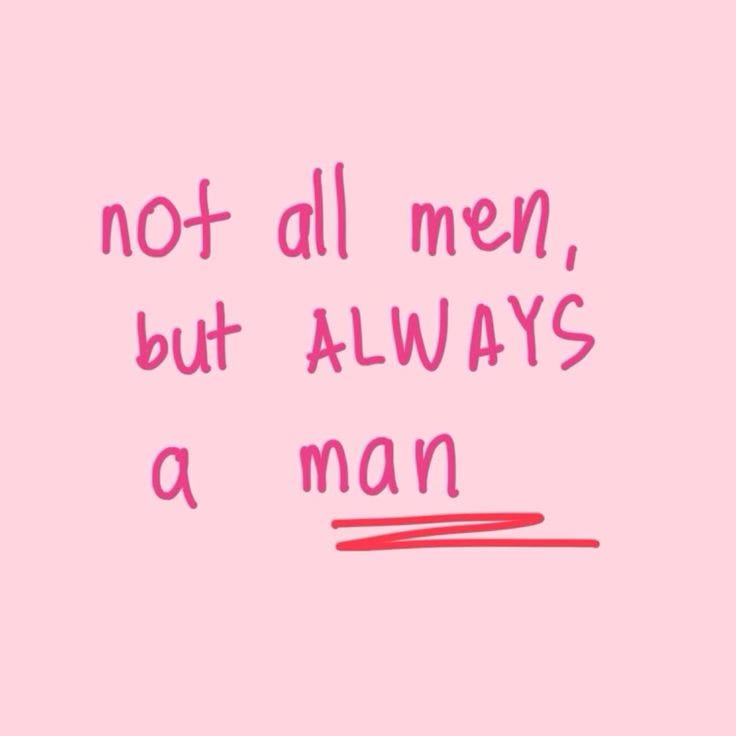
Now: why do so many men hate women?
Not dislike. Not misunderstand. Hate. The quiet, simmering kind that shows up in how a man talks over you in a meeting. The loud, performative kind that goes viral on YouTube. The deadly kind (and yes, we will get there) that makes men statistically the number one threat to a woman’s physical safety. We are living through a strange cultural moment where misogyny isn’t just surviving; it’s rebranding, monetizing, and getting a podcast deal.
So let’s talk about it.
A Brief History of Men Who Couldn’t Handle It
Here’s the thing about misogyny: it isn’t new. It’s ancient. It’s baked into legal systems, religious texts, and the architecture of nearly every institution humans have ever built. For most of recorded history, women were property, first of their fathers, then of their husbands. They couldn’t own land, sign contracts, vote, or in many places, learn to read. This wasn’t an accident. It was a design.
The design worked beautifully, for men. Women’s dependence wasn’t a flaw in the system; it was the system. And like any system built on the suppression of half the population, it required constant maintenance. Rules. Laws. Religion. Social shame. The persistent, exhausting message that a woman’s highest aspiration should be to be chosen by a man.
Then something inconvenient happened: women got educated.
The Problem With Teaching Women to Think
Access to education has arguably been the single most destabilizing force in the history of gender relations, and I mean that as the highest possible compliment.
When women entered universities in meaningful numbers in the 19th and 20th centuries, they didn’t just learn history and literature and science. They learned to interrogate the world they’d been handed. They learned that the rules they’d been told were natural were, in fact, constructed. That “this is just how things are” is not an argument. That they had options.
Today, women outpace men in college enrollment and graduation rates in the United States and across much of the developed world. They are entering the workforce in record numbers, building financial independence, delaying or forgoing marriage by choice, and (most threateningly of all) saying so out loud.
And a certain subset of men have absolutely lost their minds about it.
Not because educated women are dangerous (though power can certainly be inconvenient for those who previously held all of it). But because an educated, financially independent woman is a woman who cannot be compelled to stay. She doesn’t need to tolerate mistreatment to survive. She can leave. She can say no. She can build a life that doesn’t center a man at all and be just fine.
The hatred, when you trace it back, is almost always about this: the loss of guaranteed access.
Men Are Women’s Number One Predator. Let’s Sit With That.
This isn’t a talking point. It’s a statistic.
According to the United Nations Office on Drugs and Crime, approximately 45,000 women and girls were killed by intimate partners or family members globally in 2021 alone, the majority by male partners. In the United States, the CDC reports that roughly 1 in 4 women experience severe intimate partner physical violence, sexual violence, or stalking during their lifetime. One in five women in the U.S. has been raped. More than half of female homicide victims are killed by intimate partners.
Men are not just occasionally dangerous to women. For women, men are the primary source of physical danger, more than strangers, more than accidents, more than illness in their formative years. The person most likely to kill a woman is a man she loved and trusted.
We are expected to learn this fact early, manage our lives around it constantly, and then remain polite about it in mixed company.
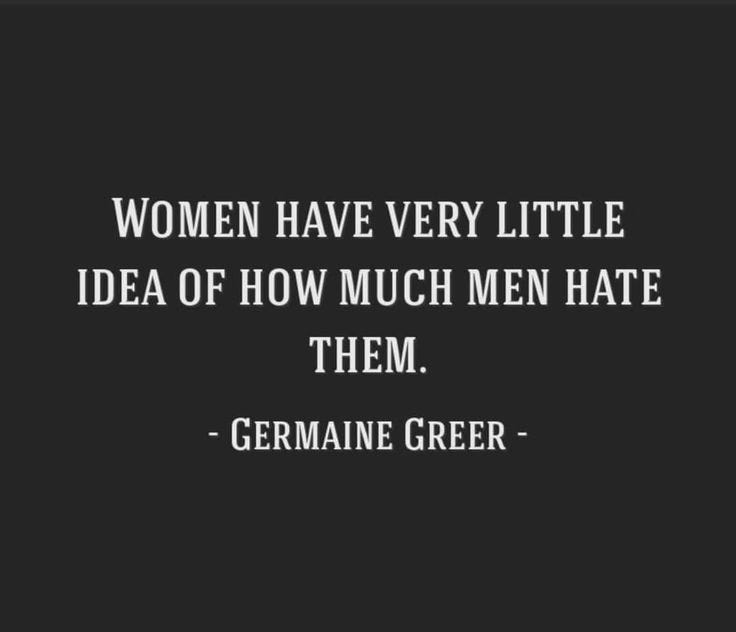
The audacity.
What’s notable (and genuinely worth examining) is that most of this violence isn’t the result of irrational rage. It’s rooted in entitlement. In the belief, conscious or not, that a woman is something a man is owed. Her body, her time, her presence, her obedience. When that perceived entitlement is threatened (she leaves, she says no, she chooses herself) violence becomes, in the perpetrator’s framework, a correction.
This is what objectification actually does. When you strip a person of their humanity, you also strip away your obligation to treat them humanely.
The Objectification Economy
Let’s be honest about what a staggering amount of male culture communicates about women: that women are, at base, bodies with utilities.
Useful for sex. Useful for reproduction. Useful for domestic labor. Useful as status symbols. But not, fundamentally, people with interior lives, ambitions, and the right to self-determination.
This isn’t just a fringe view. It’s embedded in mainstream entertainment, advertising, music, and humor in ways so normalized they become invisible. When was the last time you watched a film where the female character existed entirely in relation to what she meant to the male lead, his motivation, his prize, his loss? Last week? Yesterday? This morning, probably.
Objectification is not just a feminist buzzword. It has documented psychological consequences. Research in social psychology, including foundational work by Barbara Fredrickson and Tomi-Ann Roberts, shows that persistent objectification affects how men perceive women’s pain and intelligence, literally reducing the capacity for empathy toward them. When you train a mind to see a person as an object, the mind cooperates.
And then some of those minds found the internet.
Enter: The Red Pill, the Alpha, and the Very Online Man
Somewhere in the mid-2010s, a loose ecosystem of online communities began consolidating a set of ideas that had always existed in scattered, individual misogyny, and turned them into an ideology. A worldview. A brotherhood.
You’ve heard the terminology even if you’ve avoided the content: Red Pill. Blue Pill. Alpha male. Beta male. Sigma. Chad. Incel. MGTOW (Men Going Their Own Way). The manosphere.
The mythology works like this: society (feminism specifically) has lied to men. Men were told to be respectful, to share emotional vulnerability, to treat women as equals. And what did that get them? Rejection. Disrespect. A world where women have “too many options” and men are left behind. The “red pill” is the revelation that the world actually runs on dominance hierarchies. That women don’t want kind, emotionally available men; they want alphas. Powerful, dominant, unavailable men who project status and control.
The solution, in this framework, is to become that alpha, or accept your place as a beta (weak, feminized, undesirable) or sigma (the lone wolf who transcends the whole game entirely). Either way, the enemy is feminism, and the problem is women’s freedom.
Content creators like Andrew Tate built multi-million dollar enterprises on this message. Tate, a former kickboxer and self-described trillionaire who has faced serious criminal charges for human trafficking and sexual assault allegations in Romania, became one of the most Googled people on the planet in 2022. His audience is largely young men and teenage boys. His message: women are “intrinsically lazy,” men who do household chores are weak, and female success is either a myth or a threat.
This is not a niche corner of the internet. A 2023 YouGov survey found that 16% of American adults held a favorable view of Andrew Tate, including a significant percentage of young men under 30. The researchers who study radicalization describe the manosphere as a pipeline: entry-level content about self-improvement and male grievance slowly graduates toward explicit misogyny, and in some cases, toward violence.
The connection between red pill ideology and real-world harm is not theoretical. Several high-profile mass shooters, including Elliot Rodger, who killed six people in Isla Vista in 2014, left behind manifestos rooted explicitly in rage toward women who wouldn’t give them the access and affection they believed they were owed.
Entitlement, again. Always entitlement.
What Is This Actually About?
Here’s what I think, and I say this with genuine empathy for the men who are suffering within this framework, not just the women on its receiving end:
The rise of misogynistic ideology online is partly a story about male pain that has been catastrophically misdirected.
Men are struggling. Rates of male depression, loneliness, and suicide are genuinely alarming. Men are falling behind in education. The economic disruptions of the last few decades have hit working-class men particularly hard. The cultural scripts that used to tell men how to be men (provider, protector, patriarch) have been disrupted, and many men feel unmoored without them.
That’s real. That deserves attention.
But the manosphere’s answer to that pain is to locate its source in women’s liberation, and that is not just wrong, it’s catastrophic. Because it takes legitimate suffering and weaponizes it. It tells struggling men: your problems are her fault. Her education, her ambition, her freedom, her refusal. And then it sells them a fantasy of dominance as the cure.
The actual answer (more emotionally honest male friendships, therapeutic culture that includes men, economic policies that support working-class communities, redefining masculinity around character rather than control) isn’t as satisfying as a villain. It doesn’t go as viral.
And here’s the part nobody in the manosphere wants to say out loud: a significant amount of what presents as hatred toward women is actually a projection of unprocessed insecurity. Not a diagnosis, just an observation. The man who is furious that women have “standards now” is often the man who has never seriously examined whether he meets any. The man raging that women are “too picky” is frequently the man who has done no internal work: no therapy, no honest self-reflection, no genuine accountability for the ways he might be difficult to love. It is far more comfortable to externalize the problem. To decide that women are the broken variable rather than to sit quietly with the harder question: what role am I playing in this?
Growth requires that kind of stillness. It requires a willingness to look within, identify what is wounded and why, and do the uncomfortable work of becoming someone capable of genuine connection: someone with emotional intelligence, empathy, self-awareness, and the maturity to show up for another person without needing to dominate them to feel safe. That is not weakness. That is, in fact, the hardest and most necessary thing a person can do.
But that work doesn’t have a YouTube channel with 4 million subscribers. It doesn’t sell supplements or “masculine mastery” courses. It won’t make you feel righteous. It will just, quietly, make you better and make the people around you safer.
How This Is Affecting Everyone
Let’s be clear: misogyny doesn’t just harm women. It harms everyone it touches.
Women carry the most direct and obvious costs: violence, career penalties, the exhausting cognitive load of navigating a world that consistently communicates their secondary status. But the costs extend further.
Men who internalize red pill ideology tend to have worse outcomes across nearly every metric: more loneliness (because domination is not the foundation of genuine intimacy), more anger (because the alpha fantasy is largely unachievable and those who try it often find it hollow), and more fragility (because an identity built on never showing weakness cannot weather the actual conditions of a human life).
Society loses when half its population is systematically underutilized. When the talents, intelligence, and leadership of women are suppressed, or when women have to spend a third of their energy just defending their right to exist in a space, that’s not just an injustice. It’s an inefficiency. A waste.
And young men lose perhaps most quietly: because the boys being funneled into the manosphere pipeline are often lonely, insecure, searching for meaning and community. They deserve better mentors than men who profit from their resentment.
The Uncomfortable Truth at the Bottom of All This
Women becoming educated, financially independent, and free to make their own choices did not create a problem.
It revealed one.
The hatred that surfaces when women exercise autonomy was always there. It was just easier to contain when women didn’t have options. Now that they do, now that the architecture of enforced dependence is, however imperfectly, crumbling, the rage has nowhere to hide.
That visibility is uncomfortable. It’s also necessary.
Because you cannot fix what you refuse to name. And what we’re dealing with is not a misunderstanding, or a communication breakdown, or men and women just being from different planets.
It is a specific, documentable, historically continuous belief that women are less than: less fully human, less deserving of autonomy, less entitled to take up space.
That belief is wrong.
And more women than ever have the education, the economic independence, and the community to say so plainly, publicly, and without apology.
Which is, I suspect, exactly what terrifies people.
Men should start holding other men accountable. Call them out on their actions and behaviors instead of acting like you don’t see it. Your silence is adding to a woman's pain and hurt and is making you complicit in all this.
If this piece made you think, share it. If it made you uncomfortable, good. That’s where growth lives.
And if you’re a man reading this who felt seen in the sections about pain and misdirection rather than in the sections about hatred, reach out to other men. Build something real. The world needs you to.
Until the next,
xoxo
emmy
Quite a lot of young men walk around repeating these phrases mentally "Useful for sex. Useful for reproduction. Useful for domestic labor. Useful as status symbols". The only usefulness of women they recognise. This topic needs to be raised and tackled at the adolescent level as that is the prime area for formation of ideologies.
This is really good…thanks for sharing!